
‘Don’t wait for the rash’: Mum urges parents to trust their instincts after son’s life-threatening meningitis case
Published date: Friday 01 May 2026
A Warrington teenager is back at school and preparing for his GCSEs after hospital teams acted quickly to diagnose and treat a life threatening case of meningococcal meningitis.
Sixteen year old Jack Cowap was taken to Warrington Hospital by ambulance after becoming critically unwell at home, having developed symptoms including severe fatigue, a high temperature, confusion and – in the later stages of his condition – a small rash.
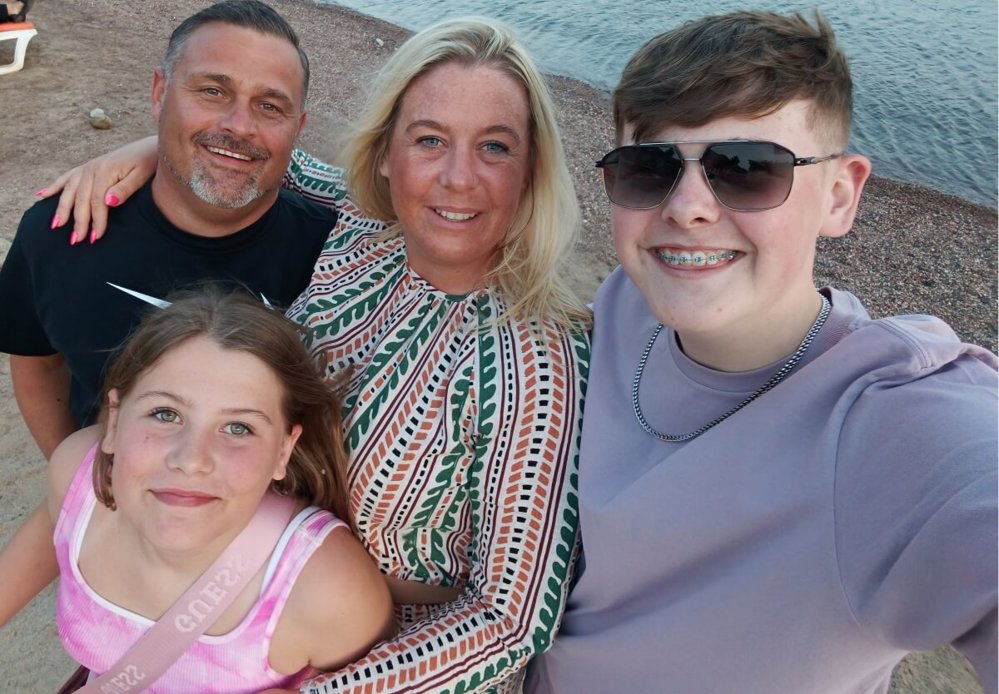
His mum Anneka Hatton said the speed, skill and compassion of hospital staff saved her son’s life.
Now, following the recent outbreak of meningitis in Kent, she is urging other parents to trust their instincts and seek urgent help if they are worried their child is showing possible symptoms of meningitis.
“It was absolutely terrifying how quickly Jack became so unwell,” she said. “One minute he was just really tired, and then suddenly everything changed. I dread to think what the outcome might have been if we’d waited any longer to get him checked.”
In the week leading up to Jack’s diagnosis he was showing signs of fatigue which the family, who live in Orford, put down to the effects of sitting mock exams. But they became increasingly concerned when his condition didn’t improve.
On Saturday 12 December Jack went into town with his friend but feeling unwell, he came home and was in bed by 5.30pm. Anneka checked on him at intervals throughout the evening, giving paracetamol and water as he was feeling warm.
She said: “I went back into him at 11.30pm to check on him before I was going to bed. That’s when I knew something wasn’t right. He was fast asleep but his body was moving, he was really hot.
“My first thoughts were that he was having a seizure, but as I observed I realised it was his heart beating so hard that it was actually moving his body. I took his temperature and it was 40 degrees. I also have a pulse oximeter, so I popped that on his finger, his heart rate was 127, he was fast asleep. I woke Jack up to ask him for any other symptoms but he just wanted to sleep.”
Anneka called 111 throughout the night for advice and after waiting for someone to get back to her, at 7am she was advised to take Jack to a walk-in centre to be seen by a doctor. But by this time Jack was appearing more unwell and complaining of a headache.
“Jack was refusing to stand up and get dressed because he was in so much pain,” she said. “I decided to look to see if he had any rash, and he had a couple of very small dark red/purple marks, like the size of a pinhead. They didn’t disappear when you pressed over them.”
After calling for an ambulance Jack was taken to the Emergency Department (A&E) where he was immediately assessed by the Paediatric Team who quickly recognised how poorly he was and began aggressive treatment while urgent tests were carried out.
Consultant paediatrician Dr Satish Hulkiere, who first examined Jack, said: “Jack was critically ill when he arrived, with signs of a very severe infection. This was a challenging and complex case that required rapid investigation and immediate treatment.”
Over several hours Jack was stabilised by a multidisciplinary team including paediatricians, emergency clinicians, anaesthetists, nurses and support staff. Due to significant confusion and agitation caused by the infection, security staff also supported the team to help keep Jack safe.
Anneka said: “Nothing about this was straightforward. Jack became disoriented and couldn’t speak properly. At one point the only word he could say was ‘mum’. But the staff jumped into action so quickly – everyone knew exactly what to do.”
Doctors made the decision while awaiting test results to treat Jack for meningitis and encephalitis without delay. A lumbar puncture later confirmed meningococcal meningitis, with blood results showing a very severe infection and possible sepsis.
With no paediatric intensive care beds available regionally at that time, a carefully co ordinated plan was quickly put in place to safely care for Jack in the adult intensive care unit. He spent the night there, closely monitored on a one to one basis by specialist nurses and overseen by the Paediatric Team, with Anneka by his bedside throughout the night.
She said: “I couldn’t rest – every beep, every sound, every time the machine took his observations I was on high alert. Me and Jack’s dad Paul were nervous about him going to the adult ICU because he was still a child, but everyone reassured us and kept us informed throughout.”
Once the medication started to show signs of working Jack was transferred to the Children’s Ward to continue intravenous antibiotics, where he remained for several days before being discharged home to complete his recovery.
Jack, whose 11-year-old sister Olivia also received treatment as a precaution, has since undergone follow up checks including hearing and vision tests, all of which were clear. Although he continues to suffer with fatigue and back pain, he has now returned to Beamont Collegiate Academy where he is preparing for his GCSE exams.
Anneka said: “The care Jack received from the ambulance to aftercare was absolutely amazing. I can’t put into words how grateful we are for everything everyone did for Jack. There were so many people and teams involved but I appreciate all of their care, knowledge, empathy and effort they put into looking after Jack and saving his life.”
Speaking about the symptoms of bacterial meningitis and her advice to parents, she added:
“I wouldn’t want anybody to ever have to go through what Jack went through, it was a very scary experience for all involved.
“If there is anything I could say to anyone else, it would be to familiarise yourself with the symptoms and if you have the slightest suspicion that your child or loved one or anyone is becoming unwell with meningitis or sepsis symptoms do not wait to get checked out.
“Please don’t wait for a rash as Jack’s was tiny and hard to see and didn’t appear straightaway. We were really lucky I acted as I did and the hospital staff acted so swiftly once he got there.”
For more information about meningitis and symptoms of the condition please visit Meningitis - NHS.